
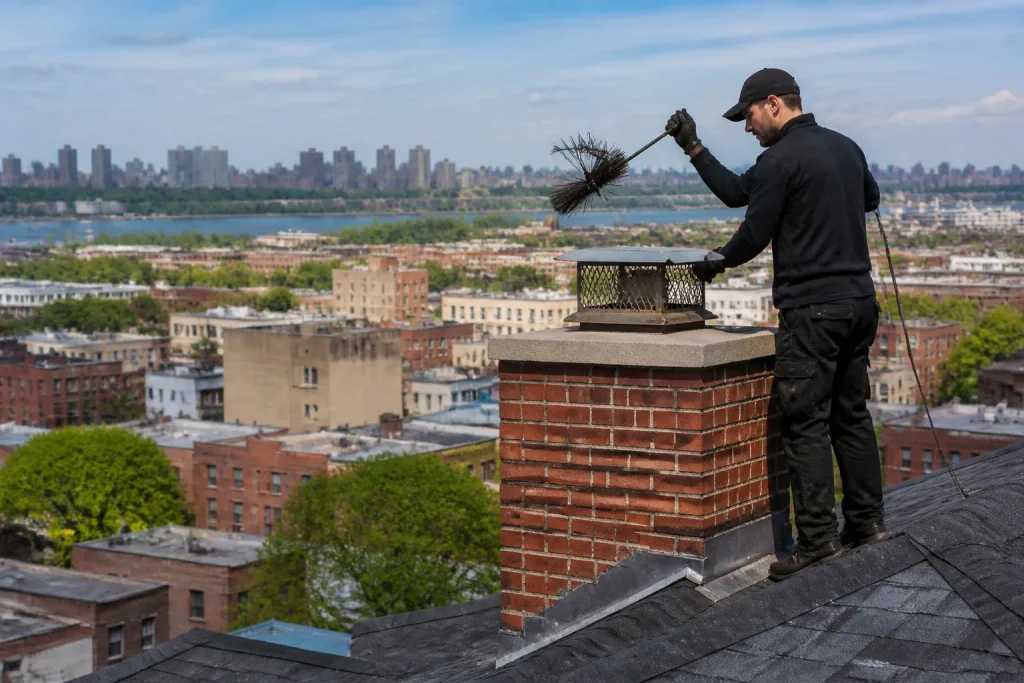
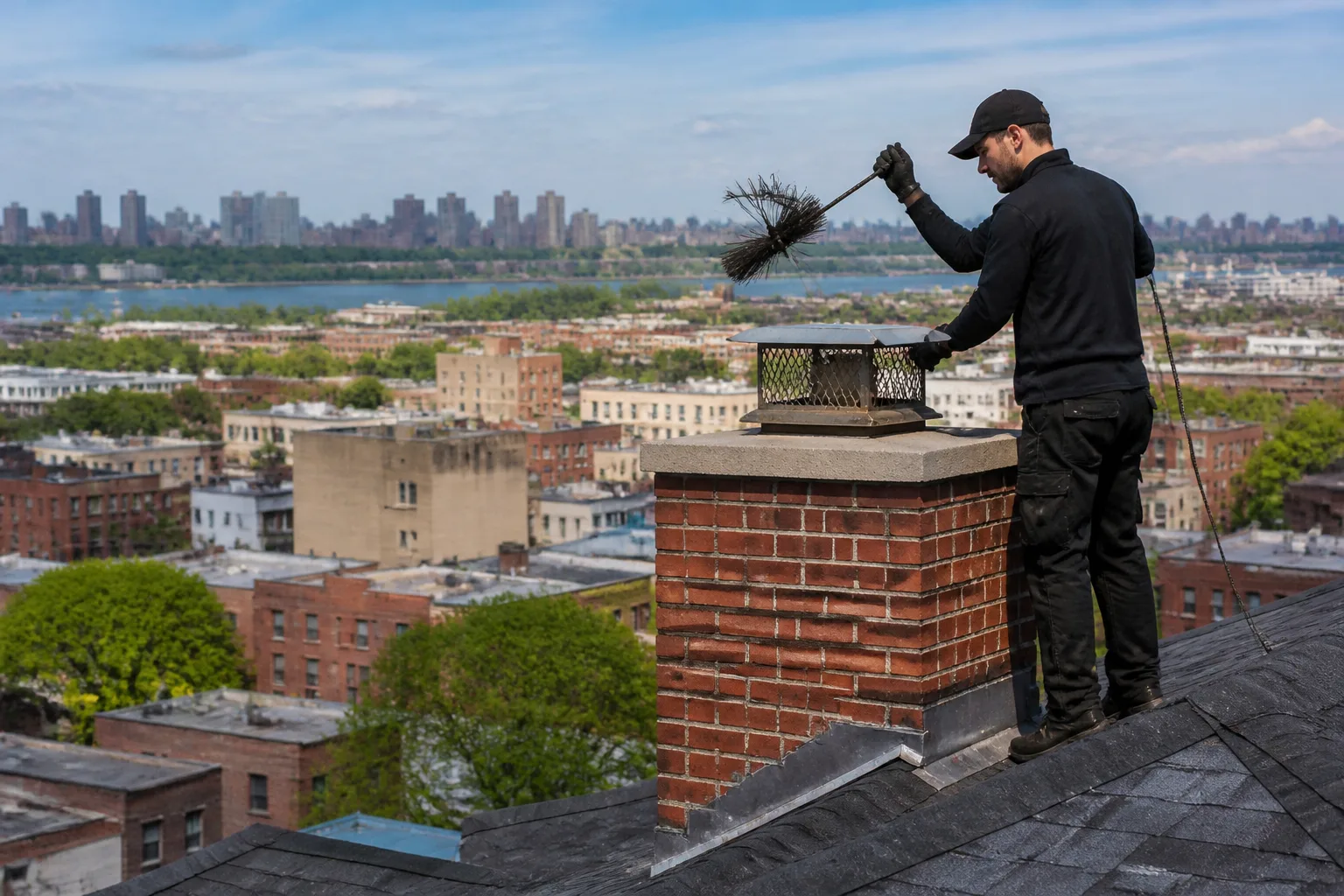
DuraFlex Chimney Sweep in Mott Haven: A Homeowner’s Guide
A DuraFlex liner installed over an unswept flue can trap corrosive debris between the liner wall and the masonry, and that mistake usually isn’t visible until the damage is already done. Most chimney guides skip the prep work entirely: the sweep and camera inspection that have to happen before a stainless liner goes in, and the first cleaning after it does. This guide covers both, plus what to ask about diameter and alloy grade before anyone touches your flue. If you’d rather have a specialist handle it, call (855) 726-7555.
Why does a DuraFlex liner need a sweep and camera inspection before installation?
A DuraFlex liner should never go into a flue that hasn’t been swept and inspected on camera first. The reason is simple physics: whatever is stuck to the flue walls stays there once the liner is inserted. Soot, creosote glaze, and broken mortar from a century of use get sealed into the gap between the new liner and the old masonry, where moisture and acidic residue begin working on both surfaces from the outside in.
Mott Haven’s housing stock makes this more urgent than in newer neighborhoods. The brick rowhouses and older multifamily buildings around the Hub and along Alexander Avenue were built with flues that have often served several heating generations, coal first, then oil, then wood or gas. Each era left its own residue behind. A quick visual check from the firebox tells you almost nothing about what’s clinging to the upper flue walls.
What a proper pre-installation inspection involves:
- A full sweep of the flue before anything else happens, so the camera has a clean surface to read.
- Video scanning the entire run, including offsets and any terra cotta sections, to find cracks, gaps, and spalling that would compromise the install.
- Checking the smoke chamber and damper area, since a liner that starts above a damaged smoke chamber still leaves a weak point in the system.
- Documenting what’s found, so the recommendation follows evidence rather than a sales pitch.
A manufacturer’s warranty assumes proper preparation. When a liner fails early because debris was trapped against it, that’s the first thing an inspector looks for. Skipping the prep is one of the clearest red flags that a contractor is cutting corners. We inspect first and recommend second, and a Chimney Sweep Mott Haven visit starts with exactly that sequence.
How does DuraFlex’s corrugated design change creosote buildup?
DuraFlex is a corrugated stainless liner, and that ribbed wall changes how creosote behaves compared with a smooth rigid liner. The corrugations create shallow ridges where flue gases slow down slightly, and that’s where creosote tends to collect first. The liner is flexible enough to navigate offsets and tight masonry runs that rigid pipe can’t follow, which is why it suits Mott Haven’s older, often irregular flues. The trade-off is that the surface isn’t glass-smooth.
In practice, that means:
- Creosote builds in the valleys of the corrugation rather than in a uniform sheet, so it can look thin from above while still holding a real layer.
- Glazed, hardened creosote on a corrugated wall is harder to remove with a brush alone, and rushing it risks abrasion damage to the stainless.
- The first season after installation often produces more residue than later years, as the new liner and the firebox settle into a working relationship.
- Wood moisture matters more here, not less. Wet wood produces more creosote, and a corrugated wall gives it more places to grab.
None of that makes DuraFlex a poor choice; it’s a widely used, professional-grade liner system, and we install it for that reason. It does mean the sweep schedule shouldn’t be stretched, and whoever cleans it needs to know they’re brushing a corrugated surface, not a smooth one. Heat, moisture, and time are hard on any flue, and the ribbed wall simply concentrates the effect.
What does the first post-installation sweep involve, and why does it matter most?
The first cleaning after a liner is installed is the most important one in the liner’s life. It confirms the installation seated correctly, shows whether the liner is running clean, and catches any early residue pattern before it hardens into something harder to remove. Think of it as the equivalent of a follow-up appointment: brief, unglamorous, and the one most likely to catch a problem while it’s still small.
A proper post-installation sweep covers more than the flue itself:
- The liner interior, brushed to match the corrugated profile, with residue checked rather than just cleared.
- The liner-to-crown connection at the top, where a loose cap or a poorly sealed top plate lets water in behind the liner.
- The appliance connection at the bottom, checking that the flue collar and any adapter are tight and free of gaps.
- The smoke chamber and damper, since a new liner doesn’t repair a worn smoke chamber above it.
- Draft performance, which tells you whether the liner is sized correctly for the appliance it serves.
Timing depends on how much you burn. A household running a wood insert hard through the cold months typically wants that first cleaning sooner than a gas fireplace used occasionally. In Mott Haven, where many homes sit in dense blocks with shared walls and limited draft, getting the follow-up right pays off in fewer surprises later. A chimney sweep after installation is a diagnostic visit as much as a cleaning one.
Which DuraFlex grade and diameter fits your Mott Haven appliance?
DuraFlex liners come in different alloy grades and diameters, and matching them to the appliance is where a lot of mistakes happen. The two grades homeowners hear about most are 304 and 316Ti stainless. The short version: 304 handles wood and most solid-fuel applications, while 316Ti offers more corrosion resistance and is the better fit for appliances that produce more acidic condensate, including many gas and oil setups and wood appliances run at low, smoldering burns.
Diameter matters just as much. It has to match the appliance’s flue collar and the manufacturer’s spec, not simply fill the available space. An oversized liner drafts poorly and collects creosote faster; an undersized one restricts the appliance. Mott Haven’s mix of gas fireplaces in renovated units and wood-burning fireplaces in older buildings means the answer genuinely differs from one address to the next, which is why we look at the appliance before recommending a liner.
| Consideration | What to check |
|---|---|
| Appliance type | Wood, gas, or oil, and the manufacturer’s listed liner requirement |
| Alloy grade | 304 for typical wood; 316Ti where condensate and corrosion are a concern |
| Diameter | Matches the flue collar and the appliance spec, not the masonry opening |
| Insulation | Whether the flue needs a wrapped or insulated liner for draft and safety clearances |
| Top termination | Correct top plate and a cap that keeps water and animals out |
Where a full reline isn’t necessary, HeatShield ceramic resurfacing can restore a damaged liner from the inside without opening the chimney. That’s a specialized option worth asking about, and it’s one we apply. A chimney repair conversation should always start with what the inspection actually found.
What are the red flags that a contractor is skipping prep work?
The clearest red flag is a liner recommendation made without a camera inspection. If nobody has actually looked at the inside of the flue, the recommendation is a guess. Beyond that, watch for a few patterns that suggest the prep work is being compressed to get to the install faster.
- No sweep before the quote. A liner estimate given before the flue is cleaned is being priced on assumption.
- No video. A flashlight from the firebox can’t show a cracked terra cotta joint thirty feet up.
- No documentation. Photos and a written report of what was found are part of a proper inspection, not an upsell.
- Grade and diameter never discussed. If nobody asks what appliance you have before naming a liner, they’re not matching the product to your system.
- The top isn’t addressed. A new liner under a failing cap and crown still takes on water. Cap and crown work is part of finishing the job.
- Repairs pushed before inspection. Any recommendation should follow evidence you can see.
We handle sweeping, inspection, repair, and installation with the same team, so there’s no handoff in the middle of a job. From sweep to repair in one call means the person who found the problem is the person who explains the fix. In our experience, homeowners ask better questions once they can see the camera footage for themselves. That’s the whole point of showing it.
When to call a pro: if you smell a sharp, acrid odor from the fireplace, see smoke backing into the room, notice water staining on the chimney breast, or you’ve just moved into a Mott Haven building with an unknown chimney history, have it looked at before you light another fire. A chimney cap and crown that fail quietly are the source of most water damage we see, and a chimney cap & crown inspection is quick.
Related services in Mott Haven: sweeping, cap and crown installation, chimney repair, fireplace repair, and inspection. You can reach all of them through a chimney sweep in Mott Haven visit.
The Bottom Line
A DuraFlex liner is only as good as the prep that happens before it goes in and the first cleaning that follows. Sweep and camera-inspect first. Match the alloy grade and diameter to your actual appliance. Don’t let anyone quote a liner without looking at the flue. And treat the first post-installation sweep as the checkup that protects the investment, because trapped debris and a loose top plate are the two failures that show up too late.
Our technicians have up to 14 years of experience, and we work with DuraFlex, HeatShield, Gelco, and Olympia Chimney products because they meet the standard this work requires. We answer 24/7, with fast dispatch from 7am to 7pm, Sunday through Friday. If you’re in Mott Haven and need help, Chimney Sweep Mott Haven offers free estimates. Call (855) 726-7555.
Frequently Asked Questions
Once a year for most households, and sooner after the first season of heavy use. A corrugated liner collects creosote in its ridges, so the annual inspection matters more than the calendar date. If you burn wood steadily through the winter, book the follow-up before the next heating season starts. Call (855) 726-7555 for an exact schedule based on your appliance.
It can be done, but it shouldn’t be. Debris left between the liner and the masonry traps moisture and corrosive residue against both surfaces, and manufacturers treat that as an installation failure. A sweep and camera inspection come first, every time. Call (855) 726-7555 if you want the flue checked before any liner decision.
Usually 316Ti, because it resists the acidic condensate gas appliances produce. Wood-burning fireplaces often do fine with 304, depending on how they’re run and what the manufacturer specifies. The appliance’s listing decides it, not a general rule. Call (855) 726-7555 and we’ll match the grade to what you actually have.
Residue hardens on the corrugated wall and becomes harder to remove without risking abrasion, and an early installation issue, like a loose top plate or a poor appliance connection, goes unnoticed. The first sweep is the checkup, and skipping it costs more later. Call (855) 726-7555 to get it booked.
Written by the team at Chimney Sweep Mott Haven.
Need Chimney Cleaning Help?
Call Chimney Sweep Mott Haven - the local pro we connect you with is licensed and insured, here with fast help in Mott Haven.
(855) 726-7555