
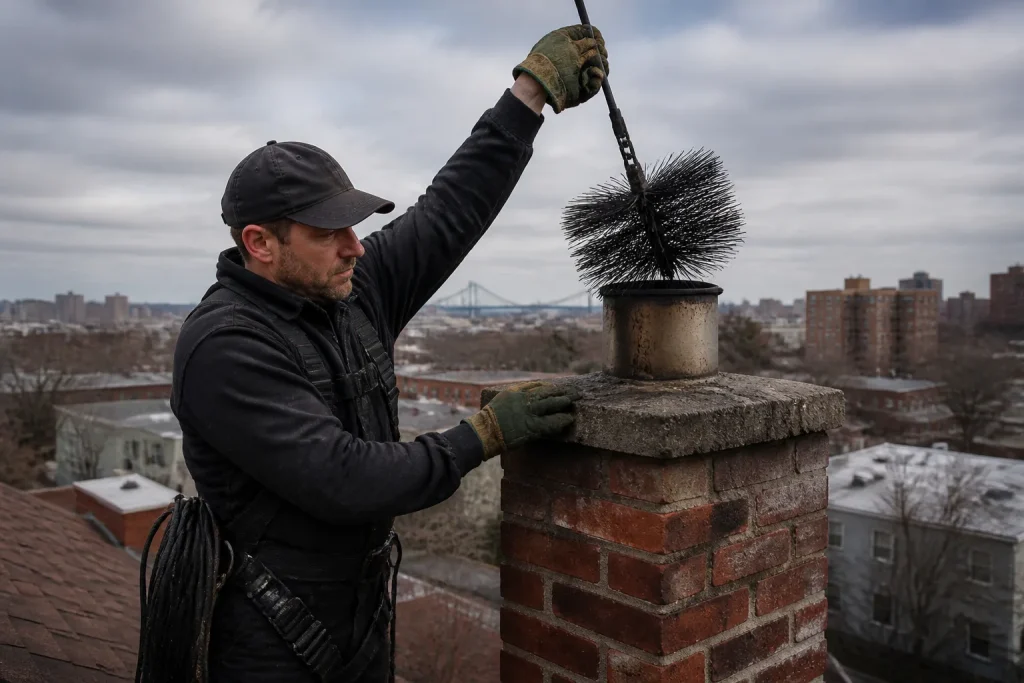
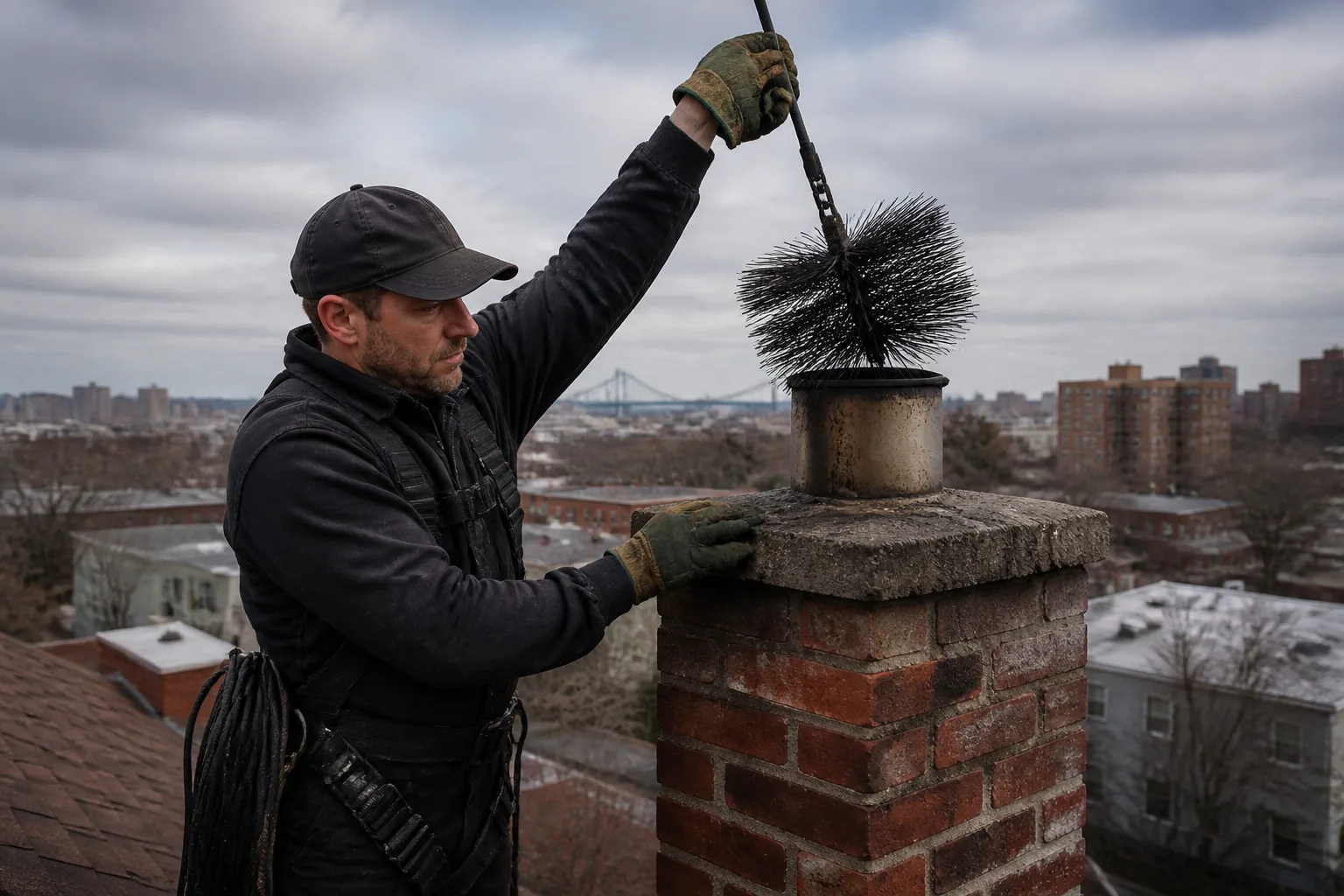
Top Signs You Need Chimney Cleaning Service – Don’t Ignore These
The signs homeowners ask us about most are the ones they’re not sure count: a stain on the outside brick, a faint smoke smell with no fire burning, a scratching sound behind the damper. Here’s the short answer. If your flue has gone a season without a sweep, if the fireplace draws worse than it used to, or if you can see or smell anything unusual around the firebox, it needs looking at. If you’d rather not climb up and guess, call (855) 726-7555 and we’ll take a look.
What Does a White Stain on the Outside Brick Really Mean?
A white, chalky stain running down your chimney’s exterior brick isn’t cosmetic. It’s efflorescence, and it means water is moving through the masonry from the inside out. When moisture soaks into brick and mortar, it dissolves mineral salts and carries them to the surface, where they dry and leave that crust behind. On a chimney, that water is usually entering at two places: a failed crown at the top or a missing or damaged cap.
What most “signs you need a sweep” guides miss is the connection to the flue itself. Persistent moisture inside a chimney changes how creosote forms. Damp, cool flue walls cause smoke to condense faster, and that condensed smoke is what glazes onto the liner as hard, tar-like creosote. So an efflorescence stain on a Mott Haven rowhouse is often telling you two things at once: the crown or cap has failed, and the flue has been running wet long enough that a cleaning is overdue. Fix the sweep and skip the cap, and the stain comes back.
Pay attention to where the stain starts. A streak that begins at the crown and runs down one face points to a crown problem. Staining low on the stack, near the roofline, often points to mortar joints that have gone porous. Both are worth a look before the next heating season.
Why Does the Room Smell Like Smoke With No Fire Burning?
The smell of smoke in a room with no fire lit is a cleaning signal, not a draft problem to live with. Creosote and soot sitting in the flue hold odor, and on a warm day or when the barometric pressure drops, that smell pushes back down into the house. A strong, sharp smoke odor that appears out of nowhere is your chimney telling you the deposits inside have built up past the point where they belong.
In Mott Haven’s attached rowhouses and older apartment conversions, this smell has a habit of showing up in the wrong room. Shared wall systems and tight floor plans mean a flue that’s pulling poorly upstairs can push odor into a bedroom or hallway that isn’t even connected to the fireplace. Homeowners often blame a drafty window. It’s usually not the window.
Two odor patterns worth knowing:
- Faint, musty smoke smell on warm days. Creosote odor pushing back down the flue. A sweep usually settles it.
- Sharp, acrid smell that lingers for days. Heavier glaze inside the flue. This needs an inspection before anyone lights another fire, because glazed creosote is the fuel a chimney fire burns.
If the smell arrived after a stretch of rainy, humid weather, moisture is likely involved too. That’s the efflorescence conversation again, and it’s why we look at the cap every time we hear about odor.
Chimney Fire Sound vs. Normal Updraft: How to Tell the Difference
Chimney fires don’t always announce themselves with flames out the top. Many burn quietly, and the only clue is a sound. Normal updraft is a soft, steady whoosh or a low rumble that rises and falls with the fire. A chimney fire sounds different: a loud roaring like a freight train or a distant jet, often paired with a series of sharp pops and cracks as creosote ignites in stages.
That distinction matters more in a Mott Haven rowhouse than almost anywhere, because you share walls with neighbors. A roaring, popping sound from a flue on the other side of a party wall can be a fire in the neighboring chimney just as easily as your own. If you hear it, treat it as real: get everyone out, call the fire department, and don’t wait to confirm which side it’s coming from.
Some signs to know:
- Normal: a steady low roar, smoke rising cleanly, a hot but even draft at the firebox.
- Possible fire: loud roaring, popping or tapping, a sudden drop in draft, puffs of smoke backing into the room.
- After a fire: a strong burnt smell, warped or discolored metal, cracked masonry, or flakes of creosote on the roof or in the yard.
A chimney fire almost always means the flue was overdue for cleaning. Once you’ve had one, an inspection comes before anything else.
Scratching Sounds and Nesting Debris: Signs of Animal Entry
Scratching, fluttering, or chittering from inside the chimney means something has moved in. In our experience, that’s almost always birds, squirrels, or raccoons that found the top of the stack open because the cap was missing, damaged, or never installed. The noise is the obvious part. The part people miss is that an animal in the flue creates two problems at once: a cleaning job to clear the nest material and droppings, and a cap repair to keep the next one out.
Animal nesting matters more than a simple mess. A blocked flue can’t vent smoke properly, so you get backdraft and carbon monoxide risk in the bargain. If you find nesting debris piled at the firebox, don’t light a fire until the flue has been cleaned and inspected.
What to look for beyond the noise:
- Twigs, leaves, or insulation fibers dropping into the firebox
- Droppings on the smoke shelf or damper
- A visible open or damaged cap when you look up from the street
- Birds circling or perching at the top of the stack
This is where a proper chimney cap & crown job earns its keep. A well-fitted Gelco or Copperfield cap keeps rain, animals, and debris out of the flue in one move, and it’s the fix a lot of sweep-only companies never get around to.
Your Fireplace Used to Draw Well. Now It Doesn’t. Why?
A fireplace that used to pull strong and now smokes into the room is a creosote restriction problem until proven otherwise. As creosote builds up on the flue walls, the passage narrows, the draft weakens, and smoke that once went up now finds its way around the damper and into the room. The fix isn’t usually a taller chimney or a draft correction. It’s a cleaning and an inspection to confirm the flue is clear.
There are competing explanations, and we’d rather rule them out with a camera than guess. A failed cap, a bird’s nest, a collapsed liner tile, or a chimney that’s simply shorter than the roofline can all cause backdraft. But in a Mott Haven building that’s seen a few winters of wood fires, creosote is the first suspect. The right order is inspect first, recommend second. A camera scope tells you what’s actually inside the flue before anyone proposes a fix.
Watch for these clues that draw is failing:
- Smoke curling back into the room when you light a fire
- A fire that’s harder to start than it used to be
- Ash or soot collecting on the firebox face or the mantel
- A draft that feels weak at the damper even on a cold day
When a fireplace stops drawing and the flue is clear, the next step is a proper look at the liner. That’s where HeatShield ceramic resurfacing comes in. It lets us restore a cracked or pitted liner in place rather than tearing it out, and it’s a service standard sweep companies don’t offer. If the liner turns out to be sound and the crown or cap is the culprit, that’s a straightforward chimney repair job.
How Often Should You Actually Get It Cleaned?
Once a year, minimum, if you burn wood. That’s the honest answer, and it matches what the trade standards call for. A sweep removes soot and creosote before it can build into something that burns. An annual inspection alongside it catches cap failures, crown cracks, and liner problems while they’re still cheap to fix. Skip a few seasons and the flue doesn’t just get dirtier; it gets to a point where the deposits themselves are the hazard.
Some homes need a sweep more often than once a year. If you burn a lot of soft wood, if your fires smoke a lot, or if the cap has failed and rain is getting in, the creosote builds faster. Gas fireplaces have their own schedule: the flue stays cleaner but the liner and venting still need checking, and a Famco venting system with a clogged termination can backdraft just like a wood flue.
Don’t guess from the outside. A camera inspection and a photo report tell you what’s actually there before you decide. We’re licensed and insured chimney specialists, and the chimney sweep we’ll walk you through is based on what the camera sees, not on a sales pitch.
When Should You Call a Pro Instead of Waiting?
Call now if any of these apply:
- A roaring or popping sound from the chimney
- Smoke backing into the room with a normal fire
- A strong smoke smell with no fire burning
- Visible efflorescence or staining on the exterior brick
- Nesting debris or animal noises in the flue
- It’s been more than a season since the last sweep
Mott Haven homeowners with attached rowhouses and older apartment conversions have less margin for error than a suburban house with a tall chimney and clear airflow. A shared wall makes a slow chimney fire into a neighbor’s problem quickly. A blocked flue in a tight floor plan pushes carbon monoxide into living space sooner. The signs of a problem are worth acting on when you first notice them, not when the next heating season starts. Our technicians have up to 14 years of experience and can work with the full range of professional-grade materials, from DuraFlex and Olympia Chimney liners to Gelco caps and HeatShield resurfacing.
Related services in Mott Haven: Chimney Sweep Mott Haven covers inspections, sweeping, caps, crowns, chimney repair, and fireplace repair so you don’t have to source a second contractor for follow-up work. From sweep to repair in one call.
The Bottom Line
The signs that actually matter are specific: efflorescence on the brick, unexplained smoke odor, the sound of a chimney fire, animal scratching, and a fireplace that drew fine last year but won’t now. Each one points to a cleaning need, a repair need, or both. Catching them early is the whole game.
If you’re in Mott Haven and need help, Chimney Sweep Mott Haven offers free estimates. Call (855) 726-7555. We answer 24/7. Fast dispatch from 7am to 7pm, Sunday through Friday. An inspection with camera and photo report comes first, then a written estimate, then the work. Nothing gets recommended that you haven’t seen evidence for with your own eyes.
Frequently Asked Questions
A sweep is priced per job by a written estimate, so the exact number depends on your flue and what the inspection finds. We set the flat price before we book, and the estimate is free. Call (855) 726-7555 for an exact quote.
Only if the camera shows one. A cracked or spalled liner needs attention, but many flues can be restored in place with HeatShield ceramic resurfacing rather than replaced outright. We show you the video and photos before we recommend anything, and we’ll tell you plainly when a repair can wait. Call (855) 726-7555 to book an inspection.
Creosote keeps building, and glazed creosote is the fuel a chimney fire burns. Beyond fire risk, a restricted flue causes backdraft and carbon monoxide buildup indoors. A skipped sweep also means a failed cap or crown goes unnoticed until moisture damage reaches the masonry. Call (855) 726-7555 for a sweep and inspection.
No. Rooftop work and working inside a flue carry real risk, and the creosote you can’t see is exactly what a camera is for. A trained technician with the right brushes and a camera scope clears it safely and documents the result. If you’d rather not risk it, call (855) 726-7555. We answer 24/7. Fast dispatch from 7am to 7pm, Sunday through Friday.
Written by the team at Chimney Sweep Mott Haven.
Need Chimney Cleaning Help?
Call Chimney Sweep Mott Haven - the local pro we connect you with is licensed and insured, here with fast help in Mott Haven.
(855) 726-7555