
Last updated November 25, 2026
 Sweep & inspection
 Caps & crowns
 Flue relining
 Masonry repair
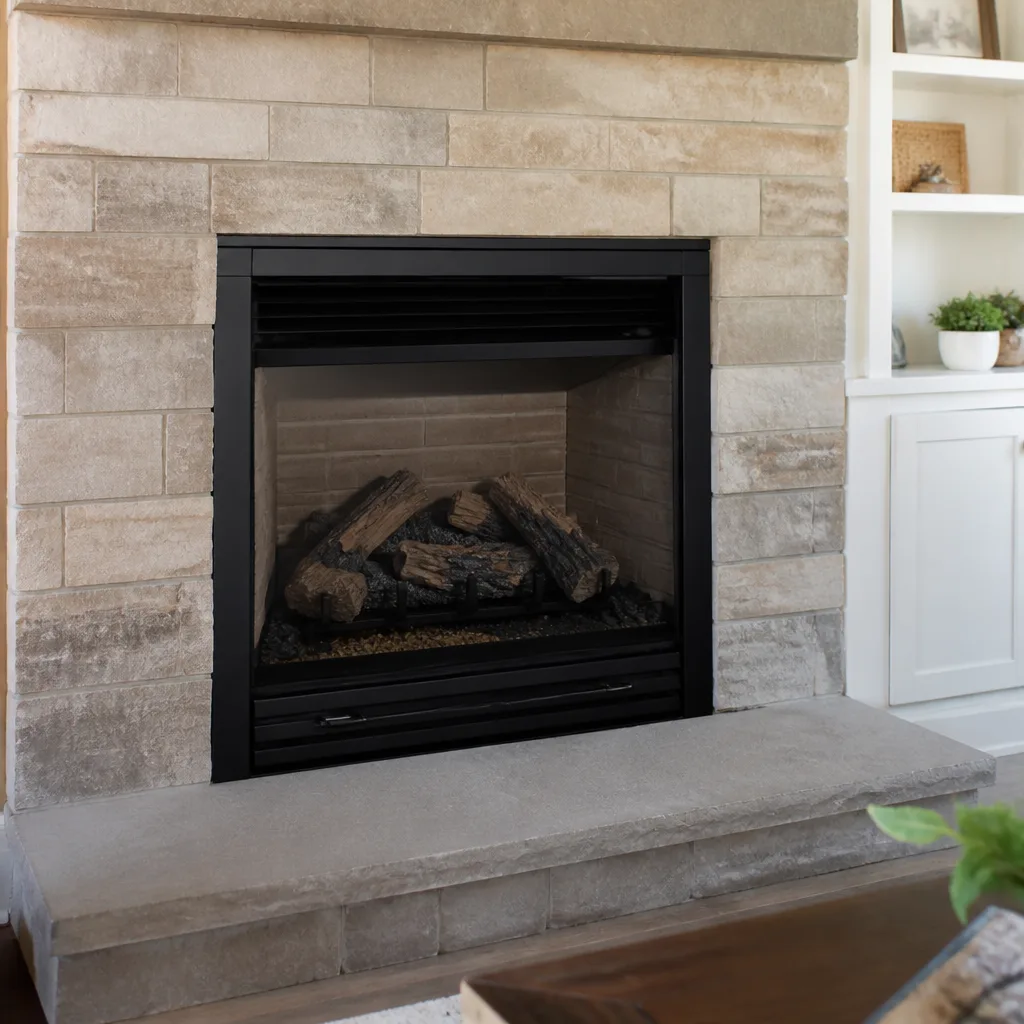 Gas fireplace service
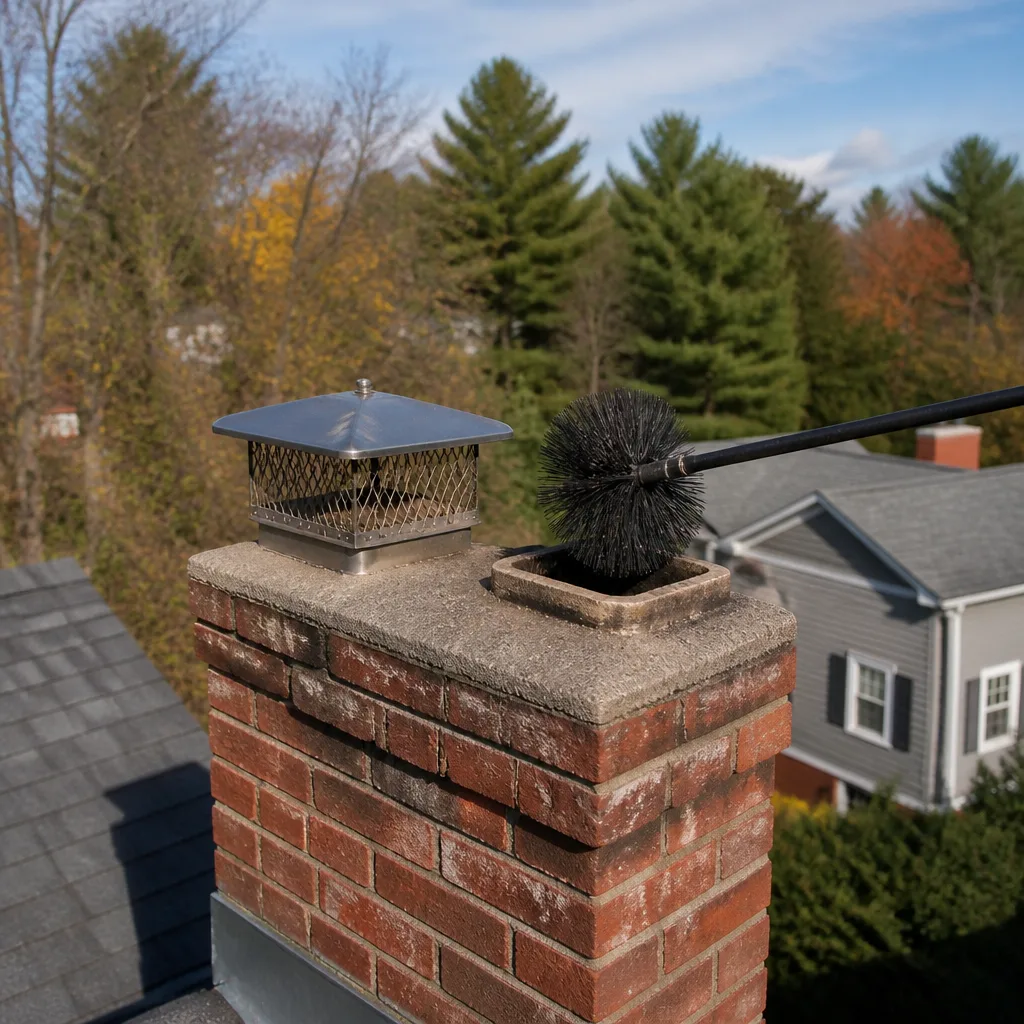
Level 1 sweep and inspection to the NFPA 211 annual standard - flue, crown, cap, and flashing checked and photographed
Chimney sweep logs do not sweep chimneys. They loosen some creosote - which then falls where a brush and vacuum still have to collect it.
Chimney Sweep Maintenance Checklist for Mott Haven Homeowners
The chimney cap is the first thing that fails on a Mott Haven rowhouse and the last thing most homeowners ever think to look at before calling for a cleaning. Everyone remembers the flue. Almost nobody climbs up to check the crown, the flashing, or the mortar on the exposed side wall, and those are exactly the parts that take the beating. In Mott Haven, that gap matters more than it does in the suburbs because the housing stock is older, the rooflines are tighter, and the freeze-thaw cycles work on brick that has already been through a century of winters. What follows is a checklist built around what actually fails here: what you can safely look at yourself, what needs a technician with a flue camera, and the threshold where “watch it” turns into “fix it before you light another fire.”
Quick Answer
A Mott Haven chimney maintenance checklist should cover four things every season: the cap and crown for cracks and animal entry, the mortar joints and flashing for water damage, the flue for soot and creosote buildup, and a written record of every visit. Most of these can be spotted visually, but the flue interior, liner condition, and anything above the roofline require a camera inspection by a trained technician. The checklist below separates what you can check yourself from what needs a professional, so you know when to monitor and when to schedule a repair.
Styles & brands we work with
- Sweep & inspection
- Caps & crowns
- Flue relining
- Masonry repair
- Gas fireplace service
Table of Contents
- Why a Mott Haven Chimney Checklist Is Different
- What You Can Check Safely vs. What Needs a Technician
- Cap and Crown: The First Things to Fail
- Masonry, Mortar, and Flashing: The Water Damage Checklist
- The Flue Interior and Creosote: What the Camera Sees
- What to Log After Every Cleaning Visit
- Warning Thresholds: Monitor, Schedule, or Stop Using
- How to Verify Your Last Sweep Actually Finished the Job
Why a Mott Haven Chimney Checklist Is Different
A chimney maintenance checklist written for a suburban colonial assumes a wide lot, a pitched roof with good drainage, and a chimney stack that stands clear of the tree canopy. A Mott Haven rowhouse gives you almost none of that. The stack is usually shared or tightly tucked between neighbors, the roofline transitions from flat to pitched at awkward points, and the exposed side wall catches the prevailing weather with no buffer. That combination changes what degrades first and how fast.
Moisture, heat, and time are hard on masonry, and in this housing stock all three arrive together. Warm interior air meets cold brick from the inside; rain and snowmelt soak the same brick from the outside; then a hard freeze expands whatever water has settled into the pores. Brick spalls. Mortar joints erode. A hairline crack in the crown opens into a channel that funnels water straight down the flue. None of those problems announce themselves. They sit quietly until a smoke smell appears in the front room or a home inspector’s report flags something you didn’t know existed.
What makes a chimney sweep in this neighborhood different is not the cleaning itself. It’s knowing which of those failures is most likely on a given block and checking for it before it compounds. A checklist built for Mott Haven should put the cap, crown, and flashing at the top of the list, not the flue. The flue is what the sweep touches. The exterior is what the winter breaks.
What You Can Check Safely vs. What Needs a Technician
There is a useful line between what a homeowner can check with a flashlight and what requires a technician with professional equipment. Crossing that line on your own is where people get hurt or miss the real problem. Here’s where the split falls:
What you can check safely from the ground or a window
- The cap: Look with binoculars for rust, missing mesh, or a cap knocked off-kilter by wind or a bird.
- The crown: Look for visible cracks, crumbling mortar at the top of the stack, or a chunk missing from the edge.
- The exterior brick and mortar: Scan the exposed side wall for flaking brick faces, recessed mortar joints, or white staining that suggests ongoing moisture.
- The flashing line: From an attic window or ladder with proper support, check where the chimney meets the roof for gaps, loose metal, or staining below the joint.
- The firebox: Look for cracked firebrick, crumbling mortar, or loose panels inside the firebox itself, never reaching up into the flue.
What needs a trained technician
- The flue interior: Creosote depth, glazing, and buildup cannot be assessed from below. A camera shows what a flashlight can’t.
- The liner: Clay tile cracks, gaps between tiles, and the condition of any installed liner require inspection through the full length of the flue.
- Rooftop components: Anything that requires walking on or leaning over the roof to inspect, including cap removal and full crown assessment, is a height-work job for a trained professional.
- The smoke chamber and damper: These behind-the-firebox areas need to be seen from above when safe to reach and checked for heat stress.
The rule of thumb: if checking it requires climbing, reaching up into the flue, or removing any part of the system, it belongs on the technician’s side of the list. A pair of binoculars and a flashlight will get you the ground-level view.
Cap and Crown: The First Things to Fail
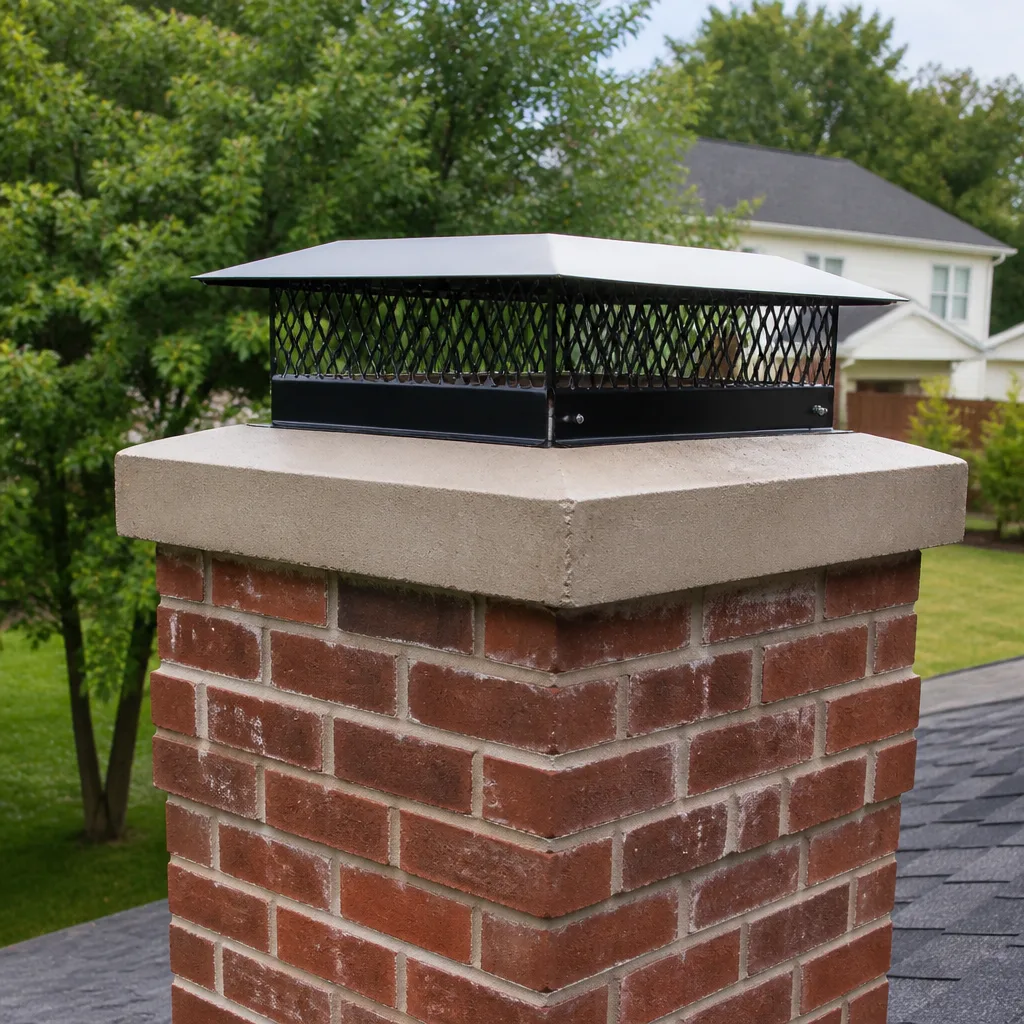
The cap and crown are where most chimney problems start, and they’re the items most homeowners forget to look at. A chimney cap & crown do two jobs. The cap keeps rain, snow, birds, and squirrels out of the flue. The crown is the sloped concrete or mortar surface at the very top of the stack, and it’s designed to shed water away from the brick below. When either fails, everything underneath it starts to degrade.
In Mott Haven, caps take a specific kind of punishment. Wind gets funneled between attached rowhouse walls and pulls at anything not properly secured. Older caps rust from the inside out, so the visual check needs to look at the mesh and the metal seams, not just the outline. When a cap goes, the symptoms are specific: water stains inside the firebox, a musty smell on damp days, birdsong echoing down the flue, or a drafty downdraft when no fire is lit. A missing or damaged cap is a repair-before-next-season item, not a wait-and-see item.
Crowns fail differently. Freeze-thaw is the main enemy. Water works into a hairline crack, the temperature drops, the water expands, and the crack widens. Over a few winters a small crack becomes a spalled edge, then a piece of the crown separates and water runs straight into the top of the brick. When we install or replace a crown, we use materials from brands we trust, including Gelco caps for the top of the system and Olympia Chimney components where they fit the stack. The point is not the brand name. It’s that a properly sized, properly secured cap and a crown with a real slope are what stop the water before it starts.
Cap and crown monitor checklist
- Check the cap every season with binoculars for rust, missing mesh, and a skewed or missing top.
- Look at the crown for cracks, crumbling, or a flat or negative slope that would hold water.
- Check the top course of brick under the crown for stains or spalling.
- After a heavy rain, look inside the firebox for new water tracks or dampness.
Masonry, Mortar, and Flashing: The Water Damage Checklist
Masonry looks permanent and isn’t. Brick absorbs moisture, mortar is softer than brick by design so it can flex and release, and both depend on water finding an easy way out. In Mott Haven, the exposed side wall and the roof transition points are where that system most often breaks down. Here’s what to look for and what it means.
Mortar joint erosion on exposed side walls
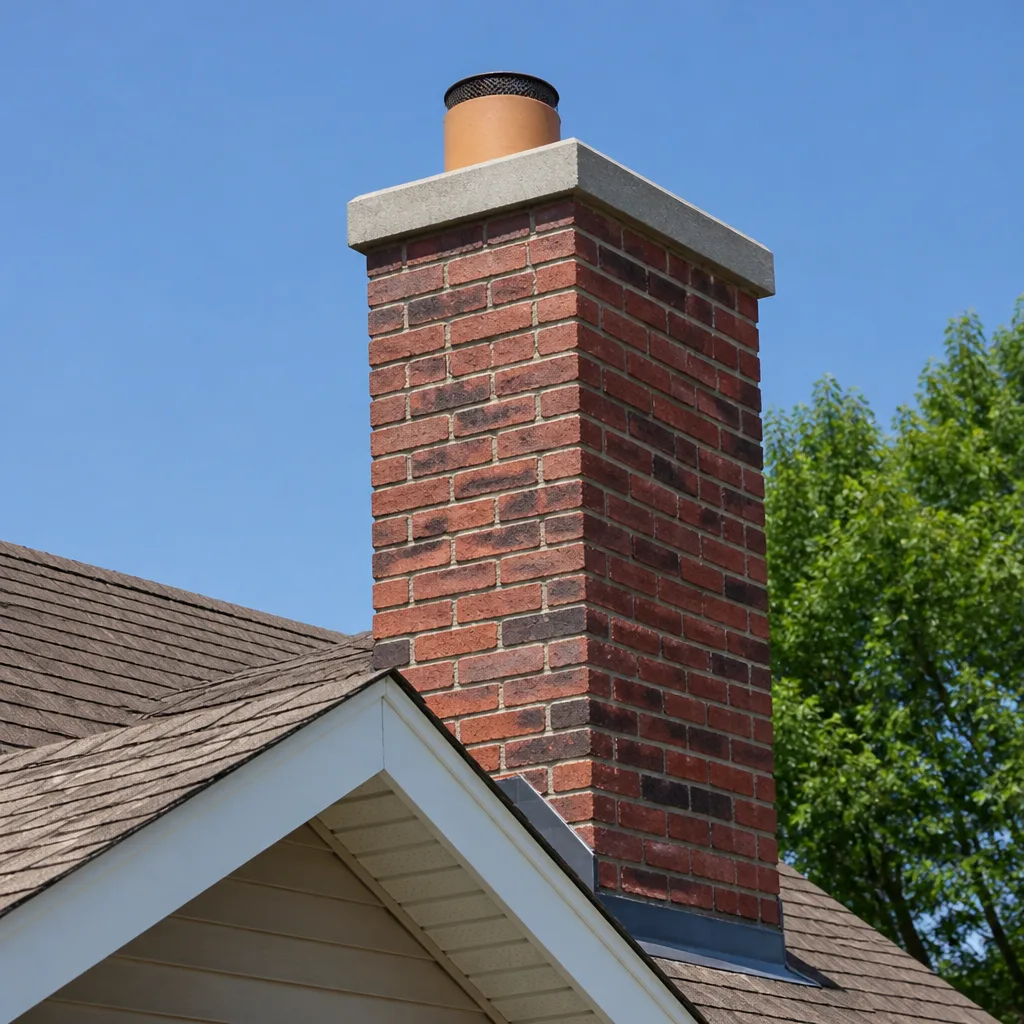
Look at the joints between the bricks on the side of the stack that faces the weather. Healthy mortar sits roughly flush with the brick face. Eroded mortar has recessed noticeably, leaving the brick edges standing proud. When the recess reaches the depth of a fingernail, the joint is past the point where a routine repoint will hold through another winter, and the brick above is exposed to water it can no longer shed. This is one of the most common findings on old Mott Haven chimneys and one of the easiest to miss because it progresses slowly.
Freeze-thaw spalling on the crown and top courses
Spalling is brick or concrete that has flaked or broken off its face. It usually starts at the top courses just under the crown or at the crown edge itself, because that’s where water sits longest and freezes first. A single small spall is a monitor item. A cluster of spalls, or spalling that exposes the softer inner brick, is a schedule-repair item before the next heating season.
Flashing failures at flat-to-pitched roof transitions
Rowhouse chimneys in Mott Haven often sit where a flat roof meets a pitched roof, and the flashing at that junction is the most under-checked part of the whole system. Flashing is the metal that bridges the gap between the chimney and the roof surface. When it lifts, cracks, or loses its seal, water goes straight into the roof structure and shows up inside the house far from the chimney itself. Check for gaps under the metal edge, rusted or loose fasteners, and any staining on the framing or ceiling below the joint. Flashing fixes belong with a chimney specialist and not a roofer alone, because the cause is almost always movement at the chimney, not the roof.
Masonry monitor checklist
- Flaking brick faces or a growing patch of spalled surface.
- Mortar joints recessed by more than a fingernail’s depth.
- White, chalky staining that returns after rain.
- Loose or lifted flashing at any roof transition.
- Any new stain on interior framing or ceilings below the chimney.
The Flue Interior and Creosote: What the Camera Sees
The flue interior is the part of the checklist that requires professional equipment, and for good reason. Soot and creosote are what a sweep removes, but the flue camera is what reveals the liner condition behind it. In our experience, that gap between “clean” and “sound” is where most surprises live. A flue can look clean from the top and still have cracked tiles or a gap in a liner section that only a camera catches.
Creosote comes in forms. A thin, dry soot brushes away. Glazed creosote, which forms when a fire burns cooler and smolders, hardens into a shell that ordinary brushing will not fully remove and that raises the risk of a chimney fire. When we find glazed creosote, we don’t just brush harder and call it done. We assess the liner condition and recommend accordingly. That’s the inspection-first, recommend-second approach, and it’s why the flue check should never be a quick once-over.
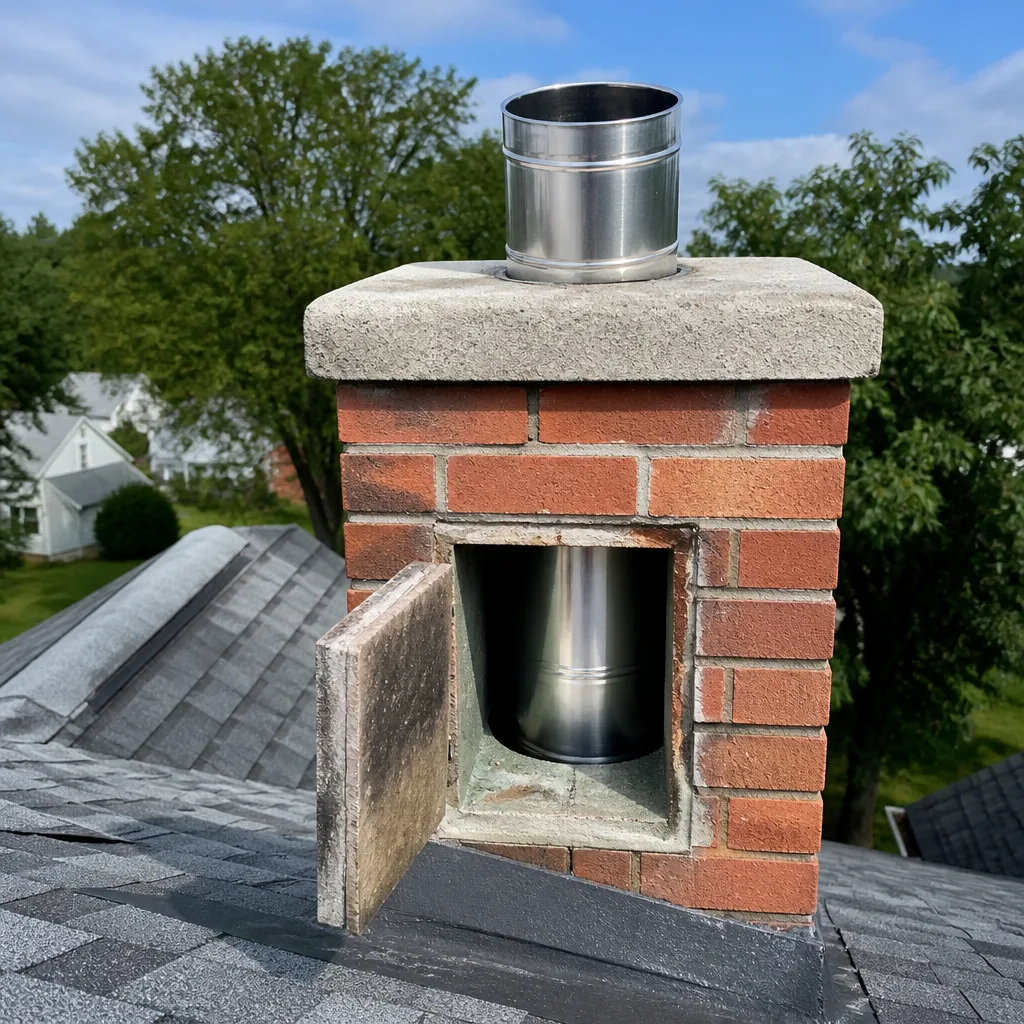
Liner condition is the other half of the flue checklist. Clay tile liners crack with heat stress and age. When a liner is compromised, gases can reach the surrounding masonry, and the masonry itself can reach temperatures it was never meant to hold. In some cases a full relining is necessary. In others, a HeatShield ceramic resurfacing can restore the liner without tearing it out, which is a non-invasive repair not every sweep company can offer. Famco venting components also come into play when a system needs a proper venting connection that fits the existing stack correctly. The differences between these options are not cosmetic. They determine whether you’re repairing the system you have or replacing part of it.
What the camera inspection shows, and the written report from it, is what you use to decide. Not a guess from a flashlight. Not a salesperson’s assessment from the ground. Photos of what was actually found in your flue, and a clear explanation of what needs attention and what can safely wait.
What to Log After Every Cleaning Visit
A chimney service record is the document that turns a series of cleanings into a history you can use. When a home inspector flags your chimney, when an insurance adjuster asks about maintenance, or when a future technician needs to know what was already done, the record is what answers for you. Every visit should produce one. If your sweep doesn’t leave one, ask for it.
Here’s what a useful service record contains, and why each item matters:
- Date and service performed. Sweeping, inspection, repair, or a combination. Knowing what was done and when lets you track how fast a problem is progressing.
- Level of inspection completed. Chimney inspections aligned with NFPA 211 standards come in levels, and the level matters. A level one is the routine check for a system in continued service. Level two is required when a change of occupancy, a transfer of property, or a repair is planned, and it includes a video scan.
- Findings with photos. Where the technician found creosote, cracks, or spalling, and a photo of each. The photo is what makes the record verifiable later.
- Recommendations and their urgency. What needs repair now, what can be monitored, and what can wait. A good record separates the three.
- Name of the technician and company. So the next technician can confirm the prior work and the homeowner can reference it for an insurance conversation.
Why keep it? Because NYC building inspections and insurance claims ask for exactly this kind of paper trail. When a property manager needs to show a council or an adjuster that the chimney has been maintained, a stack of dated service records does the work that a memory can’t. Keep the records with the property file, not in a drawer that travels with the seller.
Warning Thresholds: Monitor, Schedule, or Stop Using
The most useful thing a checklist can do is tell you which side of the line a problem is on. Every item in this guide falls into one of three states: monitor, schedule before next season, or stop using until repaired. Here’s how the thresholds map for the findings most common on Mott Haven chimneys.
Monitor
- A single small crack in the crown with no spalling at the edge, checked again after the next freeze.
- Minor mortar joint recession on a sheltered side wall, still holding mortar proud of the brick.
- A light, dry soot layer in the flue with no glazing and a liner confirmed sound at the last inspection.
- One or two minor spalls on upper courses, no exposed inner brick.
Schedule repair before next heating season
- Crown cracks that reach the edge or show water stains below.
- Mortar joints recessed past the fingernail test on an exposed wall.
- Flashing that has lifted, rusted through, or lost its seal at a flat-to-pitched transition.
- A damaged or missing cap with any sign of water or animal entry.
- Glazed creosote in the flue with a liner still in service.
Stop using until repaired
- A cracked or separated clay flue tile, or a gap in a liner that a camera has confirmed.
- Damaged firebox brick, crumbling firebox mortar, or loose firebox panels.
- Any smoke entering the room when a fire is lit, or a smell of combustion gases when no fire is lit.
- Visible structural movement in the stack, including a lean or a visibly separated section.
The reason to act before the next heating season is specific. A chimney fire can start from a creosote buildup the homeowner never sees, and carbon monoxide from a compromised liner can reach living space with no smoke signature to warn you. The checklist is not a scare tactic. It’s a way of catching the two hazards that don’t announce themselves before they become expensive or dangerous. Fix them in the off-season and you don’t have to think about them when the first cold snap arrives.
How to Verify Your Last Sweep Actually Finished the Job
The homeowner’s most reasonable worry after a sweep visit is whether the work described actually happened. A good technician makes that verifiable without you having to climb onto the roof.
- Ask for the pre-and-post photos. Any quality sweep will have them. If a company claims to have cleaned and inspected the flue and can’t show you a photo of what was found, ask why.
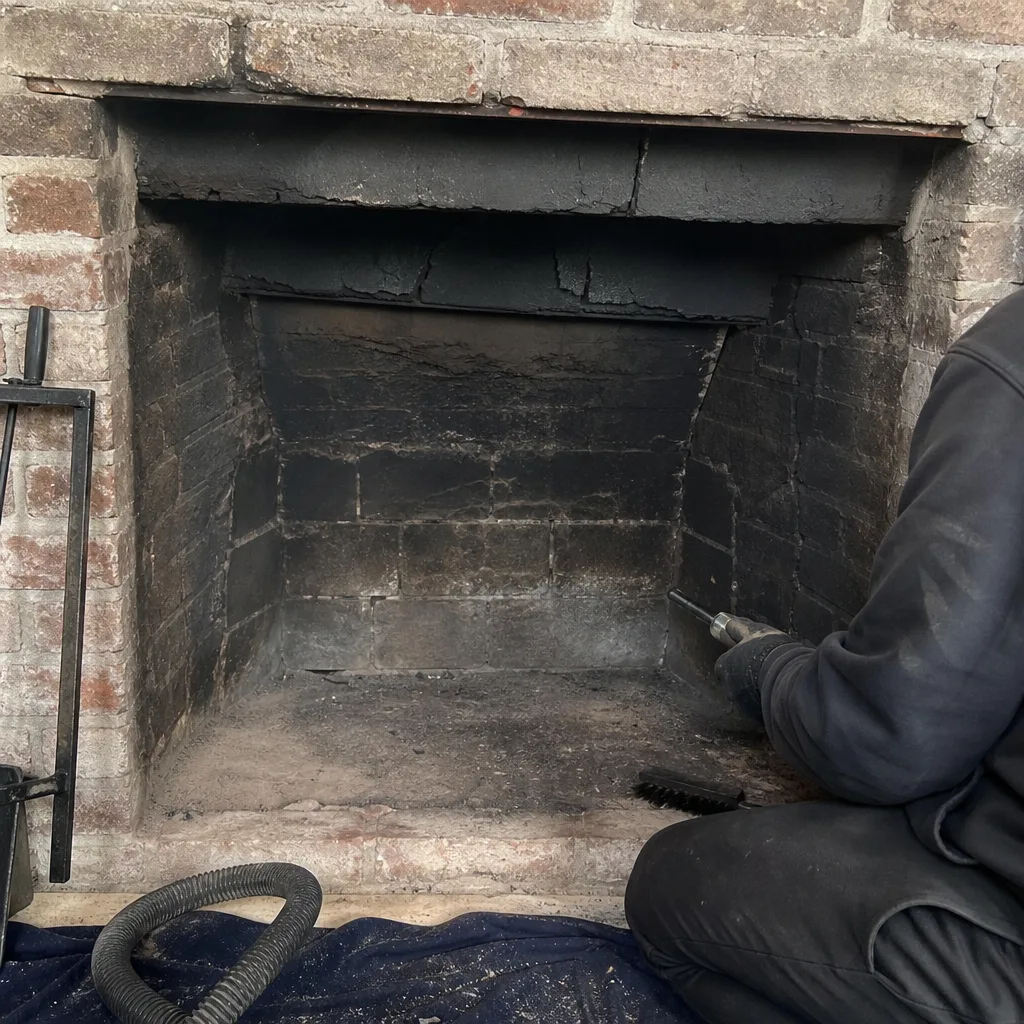
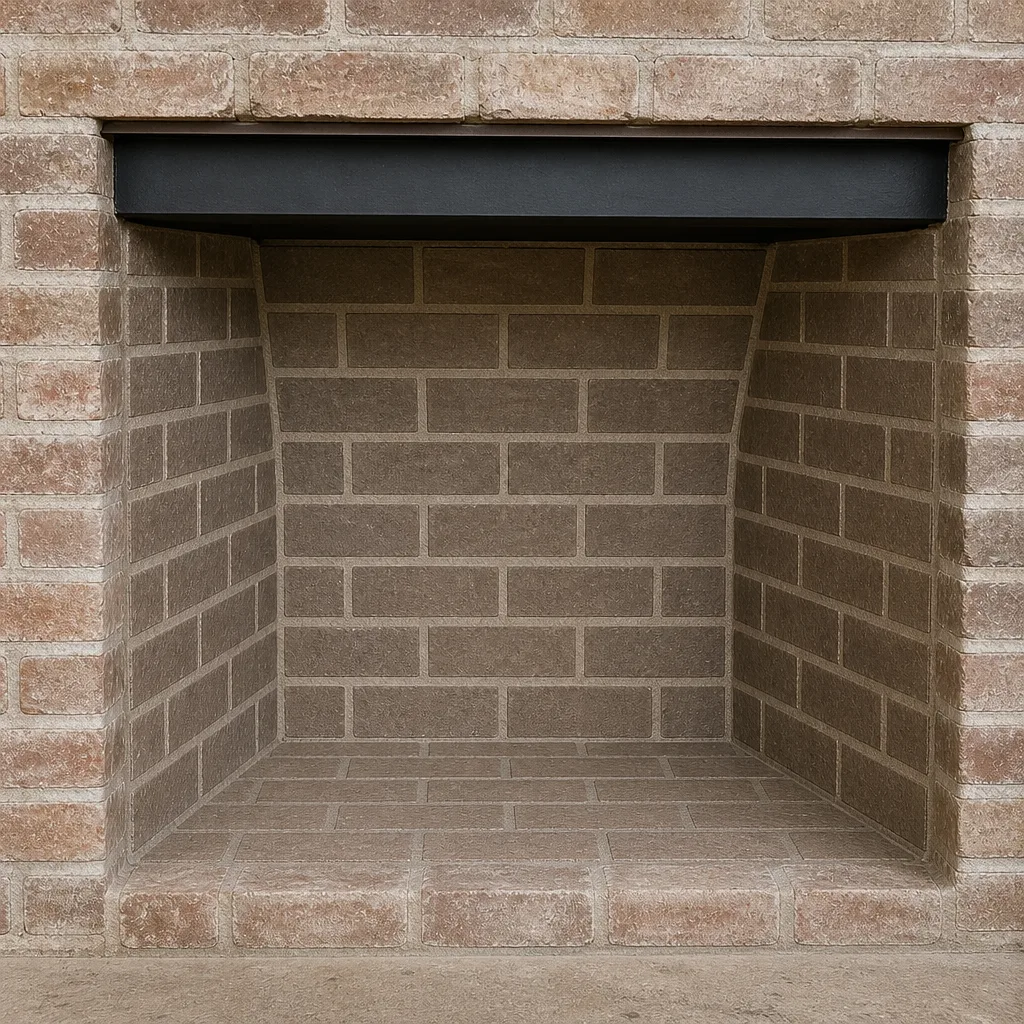
- Look at the firebox yourself. After a proper cleaning, the firebox floor and walls should be free of soot and ash with no leftover debris in the corners. A rushed sweep leaves patches.
- Check the debris bag. A real sweep contains the soot, usually through a vacuum-and-bag setup. If you find soot in the room or a fine layer on nearby surfaces, ask for a re-visit.
- Compare the flue top and bottom. If the report says the flue was swept to the crown, the top should show swept surfaces in the photos. Look for a photo of the crown itself, not just a photo looking up from below.
- Check the record for the inspection level. If you were told the sweep was routine, ask which inspection level applies and whether a camera was used. A cleaning without an inspection is half the job.
- Scan the checkoff list against the photos. Each item marked “completed” in the report should have a corresponding photo. That’s how you tell a sweep from a signature.
Verification is not about distrust. It’s about matching what the record says to what the camera shows. Any company providing a real service can pass that test without effort.
Common Mistakes to Avoid
- Skipping the annual inspection because the chimney “smells fine.” A faint smoke smell is often the first sign of a draft or liner problem, not the last. Schedule the inspection on the calendar rather than waiting for symptoms.
- Assuming a sweep-only service will catch a failing crown. A sweep that stops at the flue doesn’t look at the cap or crown, and those are the first things to fail on Mott Haven rowhouses. Ask what the visit actually covers before booking.
- Treating a cracked crown as cosmetic. A water-funnel crown sends water straight down through the masonry. Wait through one winter and the fix gets larger.
- Letting a roofer handle a flashing issue alone. Flashing failures at the chimney are usually caused by movement at the chimney itself. Fixing the roof without addressing the chimney joint is a bandage on the wrong end.
- Burning unseasoned wood or burning cooler than the chimney is made for. Cool, smoldering fires are what produce glazed creosote, and glazing is what brushes can’t remove. Burn dry wood and burn it hot enough to keep the flue clean.
- Taking the sweep’s word without checking the record. If the visit doesn’t produce a written record with photos, you can’t verify the work, and you can’t show a future inspector or insurer what was done.
- Putting off a repair through the winter because the fire “still works.” A chimney that still drafts can still have a failing liner. The symptom that matters is the inspection, not whether the fire burns.
See the difference
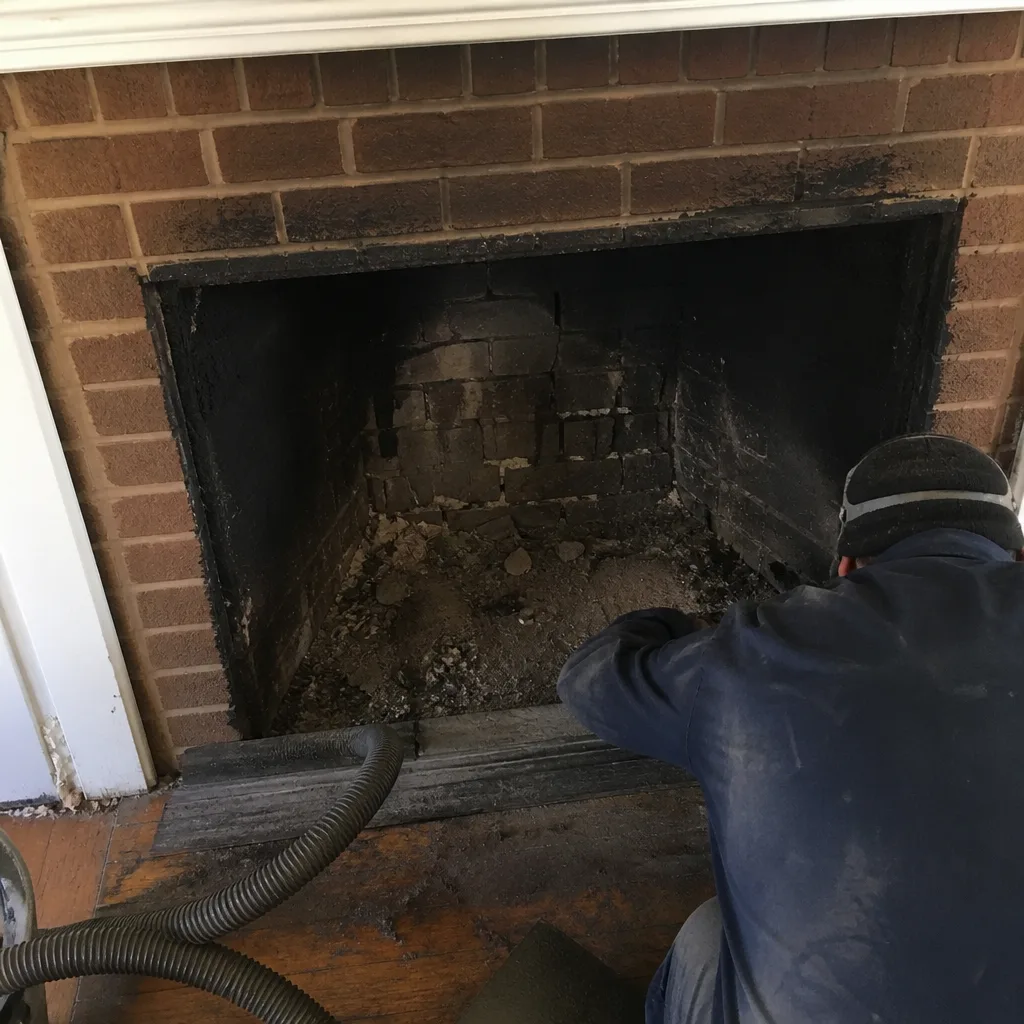 Before
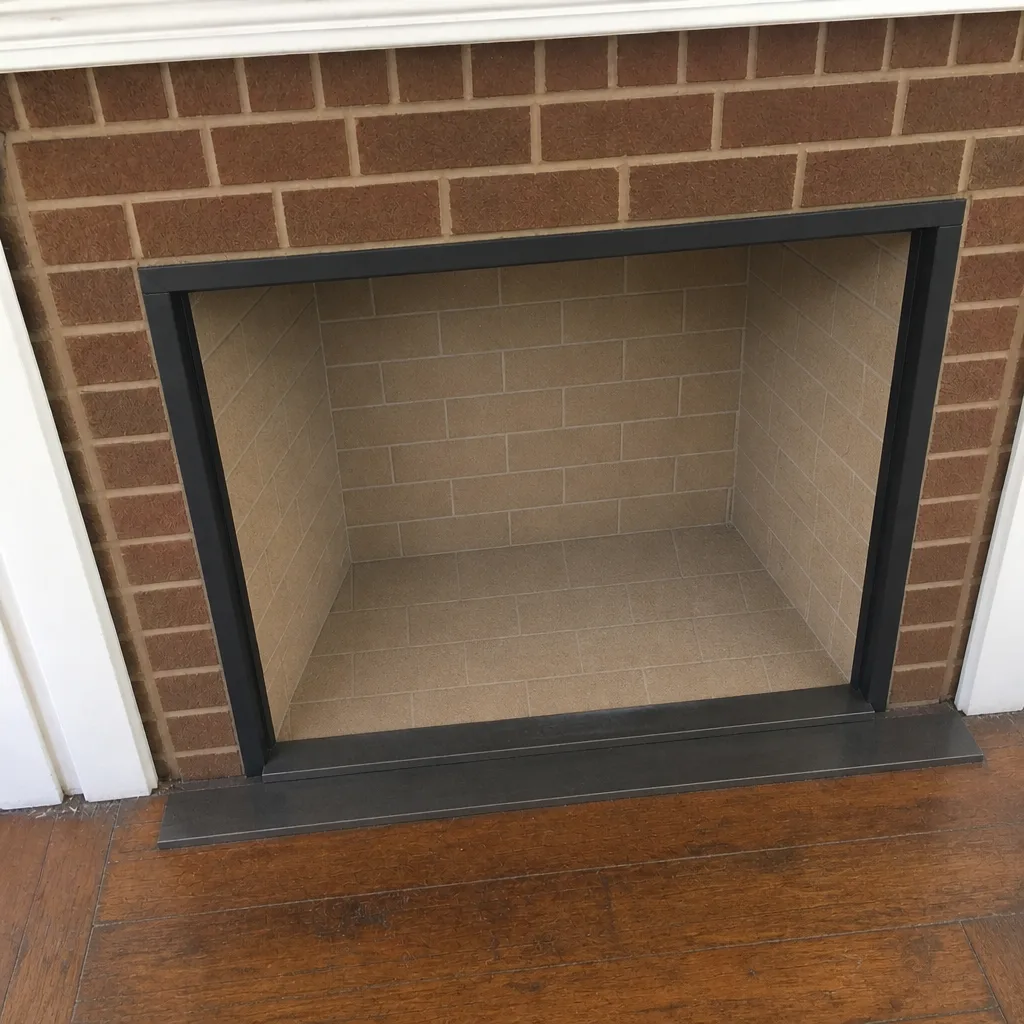 After
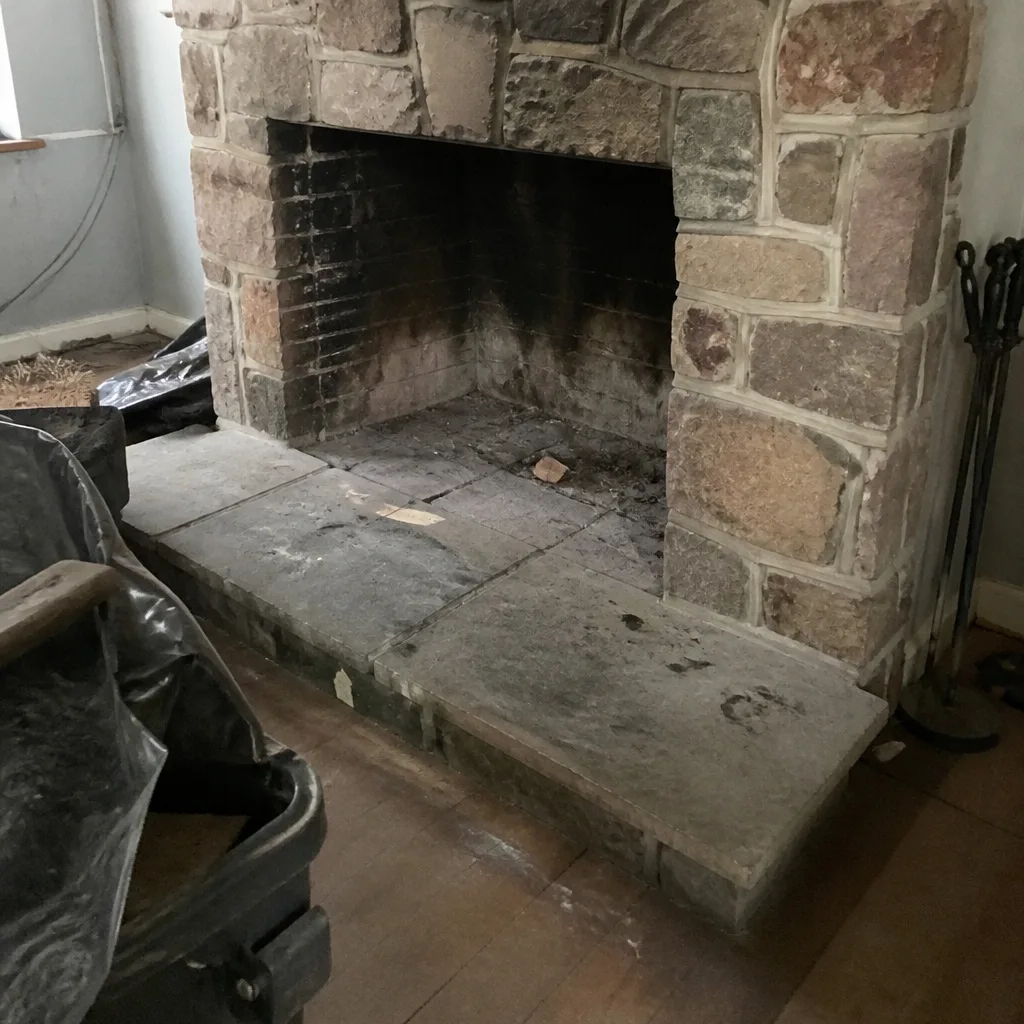 Before
 After
 Before
 After
When to Call a Professional
You should call a professional chimney service when any item crosses the schedule-repair threshold above, when a home inspection report flags the chimney, when you smell combustion gases with no fire lit, or when a fire smokes into the room. You should also call for the routine annual inspection if the flue has never been camera-inspected or if you’ve just moved into a Mott Haven property and don’t know the maintenance history. A good local specialist covers the whole system in one relationship, so a single look can lead to a cap replacement or a chimney repair without you having to find a second contractor. Chimney Sweep Mott Haven offers free estimates in Mott Haven. Call (855) 726-7555. We answer 24/7. Fast dispatch from 7am to 7pm, Sunday through Friday.
Our technicians have up to 14 years of experience across the full chimney lifecycle: inspection, sweeping, cap and crown work, chimney repair, and fireplace repair. From sweep to repair in one call, with no subcontracting between the inspection and the fix. Whether you’re scheduling the annual visit or dealing with a finding from a recent report, a Chimney Sweep Mott Haven appointment starts with the inspection and ends with a recommendation you can review.
Frequently Asked Questions
Once a year for inspection and sweeping, and it should be scheduled before the heating season, not after a problem appears. If the fireplace is used heavily or burned with unseasoned wood, a mid-season check is worth adding. The annual inspection is what catches the creosote buildup and liner wear a homeowner can’t see from below.
You can spot a damaged cap or a cracked crown with binoculars, and you should. But confirming the crown slope, checking the top course of brick under the crown, and re-securing a cap all require a trained technician on the roof. If the cap has failed, the repair should happen before the next winter, not after.
The camera shows the full length of the liner, including gaps between clay tiles and cracks that a light from below can’t reach. It’s how a technician confirms whether glazed creosote has affected the liner and whether a resurfacing product like HeatShield or a full reline is the right fix. Ask for the photos and review them.
Ask for before-and-after photos of the flue top and bottom, and check the firebox yourself for leftover soot. A complete sweep leaves photos of the crown as well as the flue, and the firebox floor is clean. If there’s no record and no photo, treat the work as unverified.
Yes. NYC building inspections and insurance claims treat the service record as the evidence of maintenance. A dated record with photos of findings and a written recommendation is what answers the question of when the chimney was last inspected and what was found. Keep it with the property file.
When mortar joints recede past the fingernail test on an exposed wall, when a crown cracks to its edge or shows staining below, or when spalling exposes the inner brick. Below those thresholds, monitor and recheck after the next freeze. Above them, schedule the repair before the next heating season. Call (855) 726-7555 for a free estimate in Mott Haven.
The Bottom Line
A Mott Haven chimney checklist works best when it starts with the surface that fails first. Check the cap, the crown, the mortar on the exposed wall, and the flashing at roof transitions. Then check the flue, and get a camera inspection when you don’t have a recent one. Write down every visit and keep the record where you can find it. The three states matter: what’s safe to monitor, what to schedule before winter, and what to stop using until repaired. That’s the entire checklist, and it’s short enough to keep on a single page. If a finding crosses a threshold, don’t wait for the next heating season.
Call (855) 726-7555 for a free estimate. We answer 24/7. Fast dispatch from 7am to 7pm, Sunday through Friday. From sweeping to repair, our technicians cover the whole chimney system so nothing falls between contractors. Whether you need a chimney sweep or a closer look at the cap and crown, start with the inspection and go from there.
Written by the team at Chimney Sweep Mott Haven.